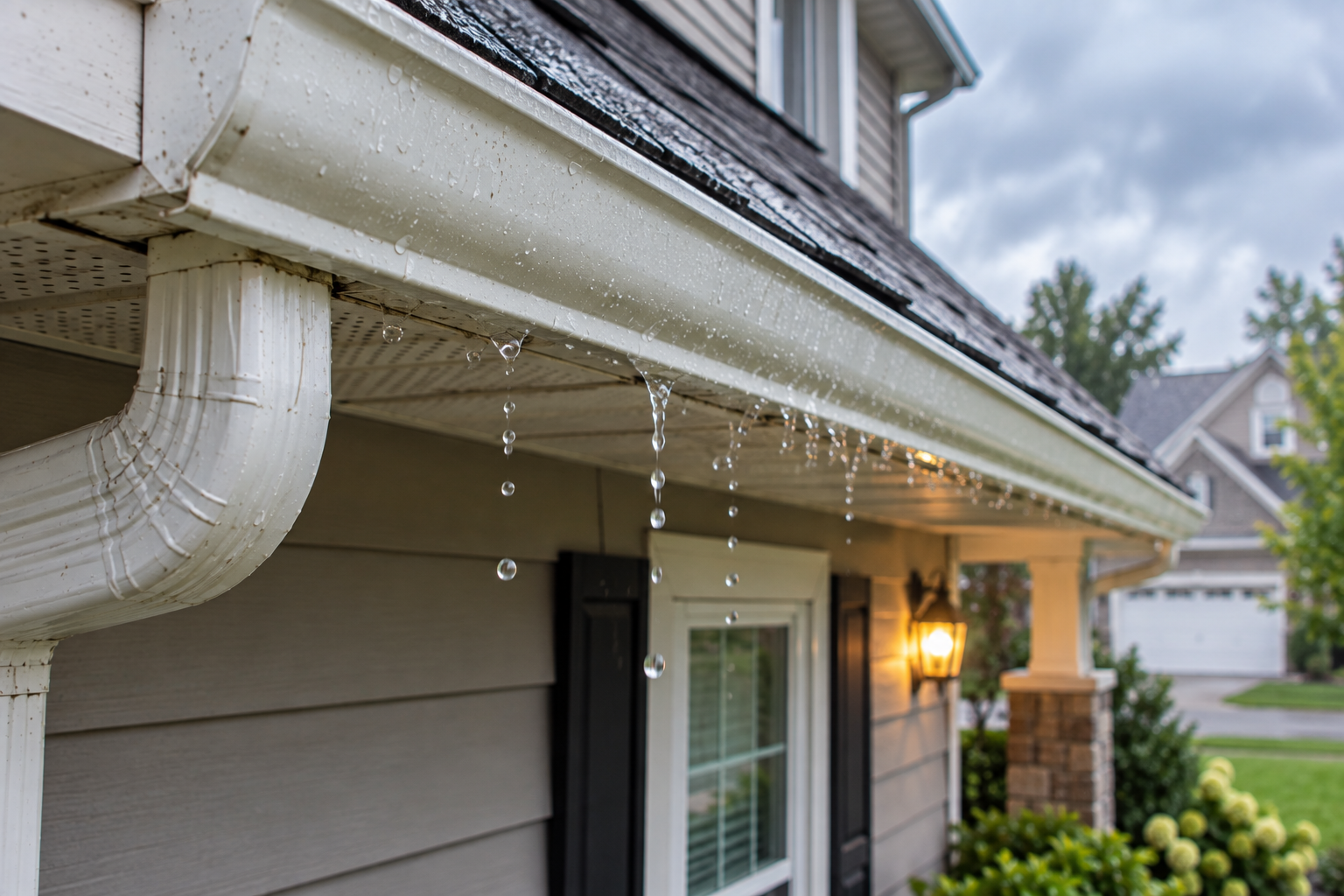
You expect water to flow through your gutters and into the downspouts. So, when you notice water dripping from underneath the gutter instead, it can be difficult to figure out where it is coming from.
Gutters dripping from the bottom can happen for several reasons. A small leak, deteriorating sealant, loose end cap, standing water, or another drainage issue may be responsible. Sometimes, the water is not even leaking through the gutter itself. It may be traveling behind or underneath it before finally dripping to the ground.
Understanding where the water starts can help determine whether your gutters need a simple adjustment or whether there is a larger problem.
Why Are My Gutters Dripping From the Bottom?
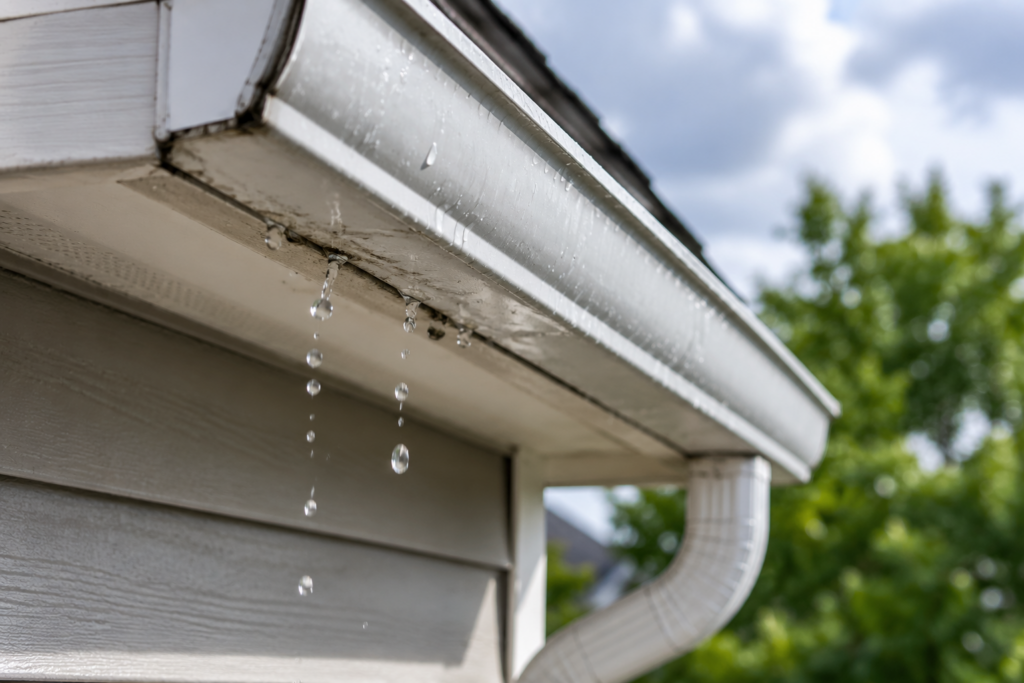
The location of the drip can tell you a lot about the possible cause.
If water appears underneath a corner or end of the gutter, an end cap or seal could be leaking. Water dripping from the middle of a gutter run may point toward a seam, small opening, or another damaged area.
However, homeowners should also look at what is happening above the drip. Water can travel along surfaces before falling, making the source of a gutter leak appear farther away than it actually is.
That is why finding the actual entry point is important before deciding how to address the problem.
Worn Gutter Sealant Can Allow Water Through!
Gutter systems have certain areas that may require sealant to keep water contained. Over time, exposure to changing temperatures, moisture, and weather can cause older sealant to deteriorate.
Once that happens, small openings may develop.
Water can then work its way through those areas and appear as drops underneath the gutter. The problem may be especially noticeable during steady rainfall when the gutter is carrying more water.
Replacing deteriorated sealant may solve certain leaks, but the surrounding gutter should also be checked for damage.
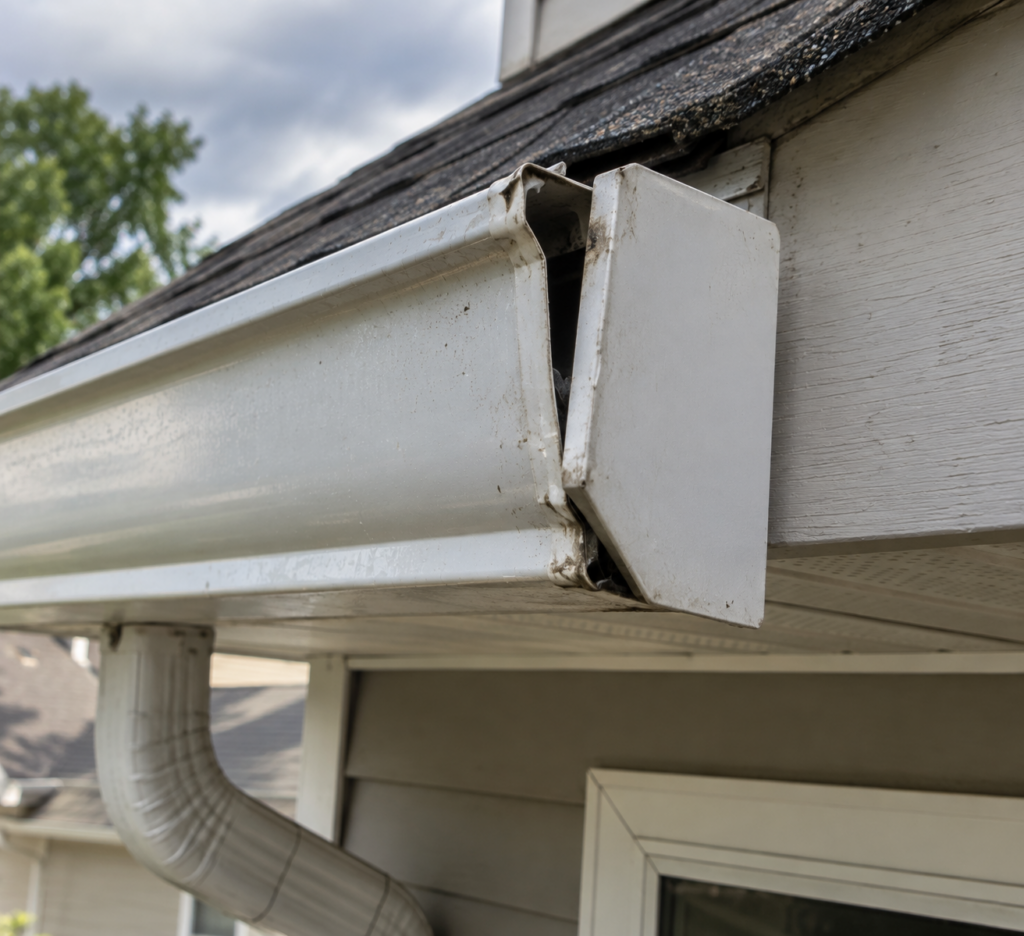
Could a Loose End Cap Be Causing the Drip?
End caps close off the ends of a gutter run. If an end cap becomes loose or its seal begins to fail, water may slowly escape around it.
You might notice:
- Dripping near the end of the gutter
- Water marks below the end cap
- Moisture on the fascia near the gutter end
- Dripping that becomes heavier during rainfall
An end-cap leak can look minor, but repeatedly allowing water to run down the same part of the home is something worth addressing.
Small Holes Can Cause Gutters to Drip!
A gutter does not need a large opening to leak.
Even a small hole can allow water to drip from the bottom. Depending on the gutter’s condition, openings may develop around damaged areas or old attachment points.
A tiny opening can be difficult to notice when the gutter is dry. Once rainwater begins flowing through the system, however, the location may become much easier to identify.
If several areas are leaking, it may also be worth evaluating the overall condition of the gutter rather than treating each drip individually.
Standing Water Can Make Gutter Leaks More Noticeable!
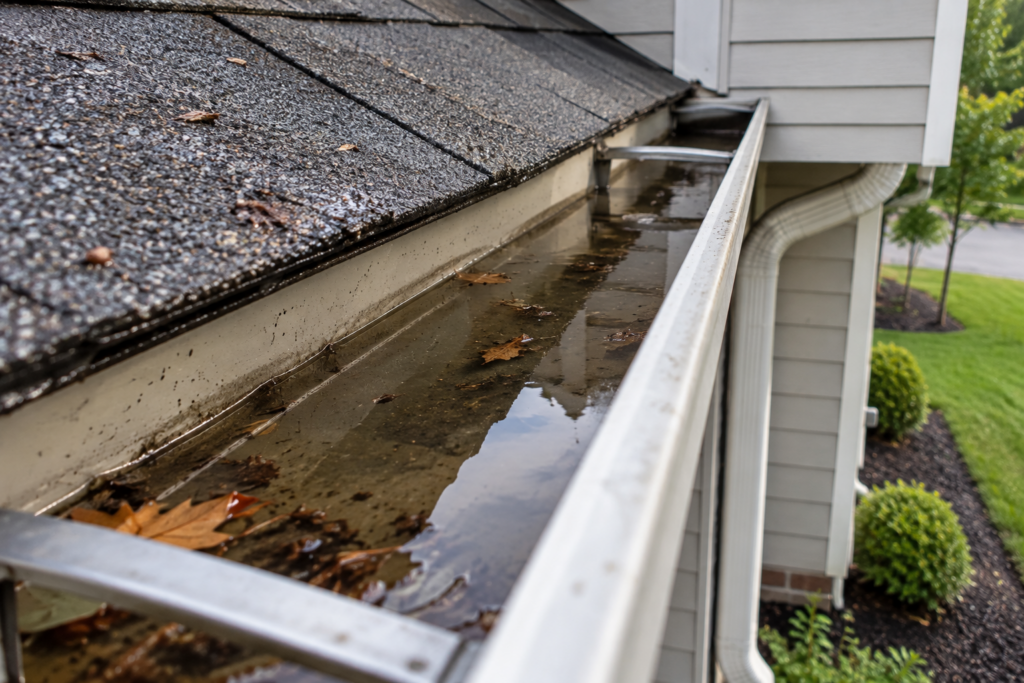
Gutters are designed to direct water toward the downspouts. Proper pitch helps keep that water moving.
If part of the gutter holds standing water, small weaknesses can become much more noticeable. Instead of water quickly moving past an area, it may remain there and slowly find its way through a vulnerable spot.
Standing water may be related to:
- Improper gutter pitch
- A low section in the gutter run
- Debris restricting water movement
- A partially blocked downspout
- Movement or sagging in the gutter system
Fixing the leak without addressing why water is sitting in that area may not solve the entire problem.
Is Water Actually Getting Behind the Gutter?
Not every drip underneath a gutter means there is a hole in it.
Sometimes, rainwater gets behind the gutter and travels along the fascia or underside before dripping down. This can make it appear as though the bottom of the gutter itself is leaking.
The relationship between the roof edge, drip edge, fascia, and gutter placement can affect how water enters the system.
If rainwater consistently travels behind the gutter, the installation should be inspected to determine why water is not entering the gutter correctly.
Why You Shouldn’t Ignore Gutters Dripping From the Bottom!
A few drops of water may not seem like a serious problem. However, gutters exist to control where roof water goes.
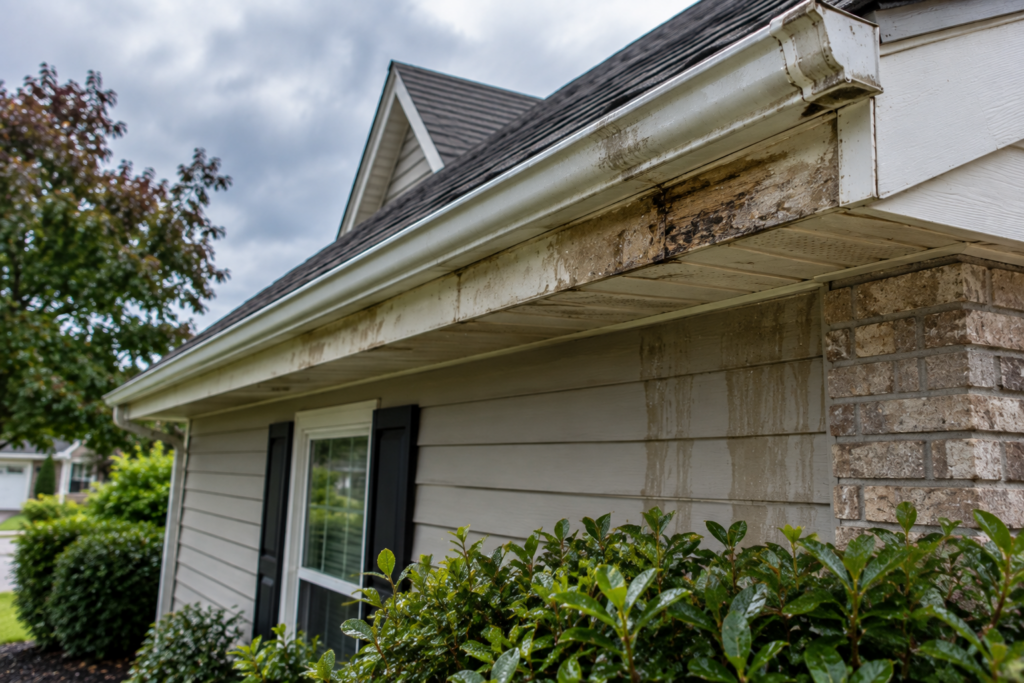
When water regularly escapes from the system, it can repeatedly soak areas that should remain relatively dry.
Depending on where the leak occurs, uncontrolled water may affect the fascia, siding, landscaping, or areas around the home’s foundation. A small gutter leak can also become larger as components continue to age or move.
Catching the source early can make the problem easier to address.
Does a Dripping Gutter Need to Be Replaced?
Not necessarily.
Some gutter leaks can be corrected without replacing the entire system. A loose component may need to be secured, deteriorated sealant may need attention, or the gutter pitch may need to be adjusted.
Replacement may make more sense when there is widespread damage, repeated leaking, significant movement, or other problems throughout the system.
The important part is determining why the gutter is dripping from the bottom before deciding on a solution.
Check Your Gutters During the Next Rainfall!
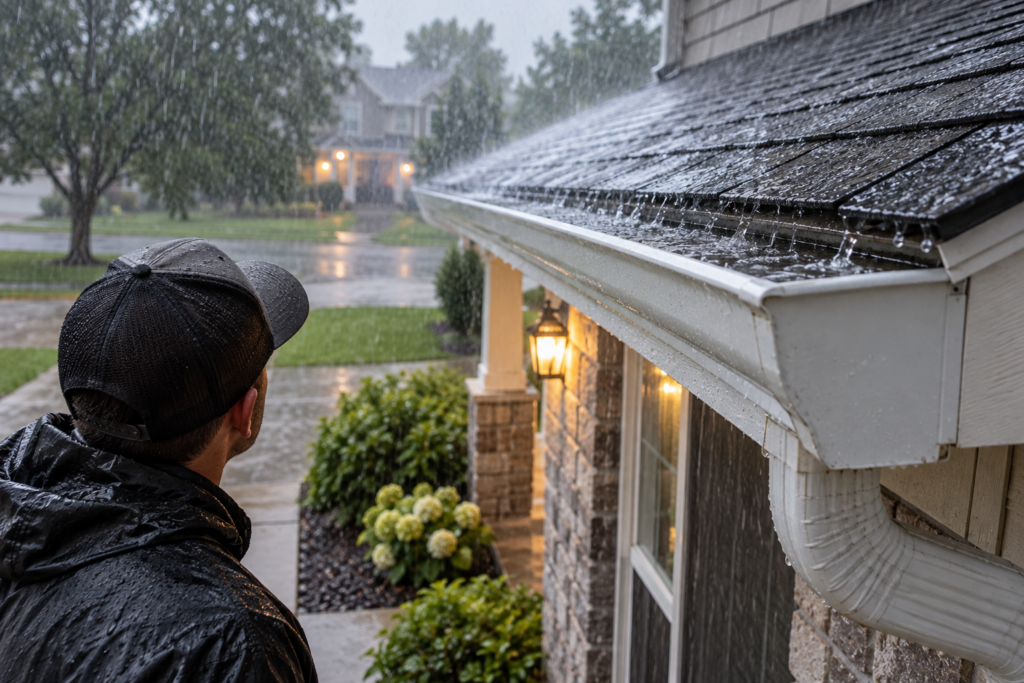
One of the easiest ways to spot drainage problems is to observe your gutter system while it is raining, as long as you can do so safely from the ground.
Watch where water enters the gutters, how it travels through them, and where it exits.
Look for water:
- Dripping underneath the gutter
- Running behind the gutter
- Escaping around an end cap
- Collecting in one section
- Overflowing instead of reaching a downspout
These signs can provide useful clues about what is happening within the system.
Let J&A Exterior Take a Look at Your Gutters!
If you’re noticing gutters dripping from the bottom, finding the actual source of the water is the first step.
J&A Exterior works with gutter systems throughout Southeast Michigan and can help homeowners identify gutter problems and determine an appropriate solution. Whether the issue involves a small problem area or an aging gutter system that needs replacement, addressing it can help keep rainwater moving where it belongs.
If something doesn’t look right with your gutters, contact J&A Exterior to have the system checked.
Warm Regards,
The J&A Team!
