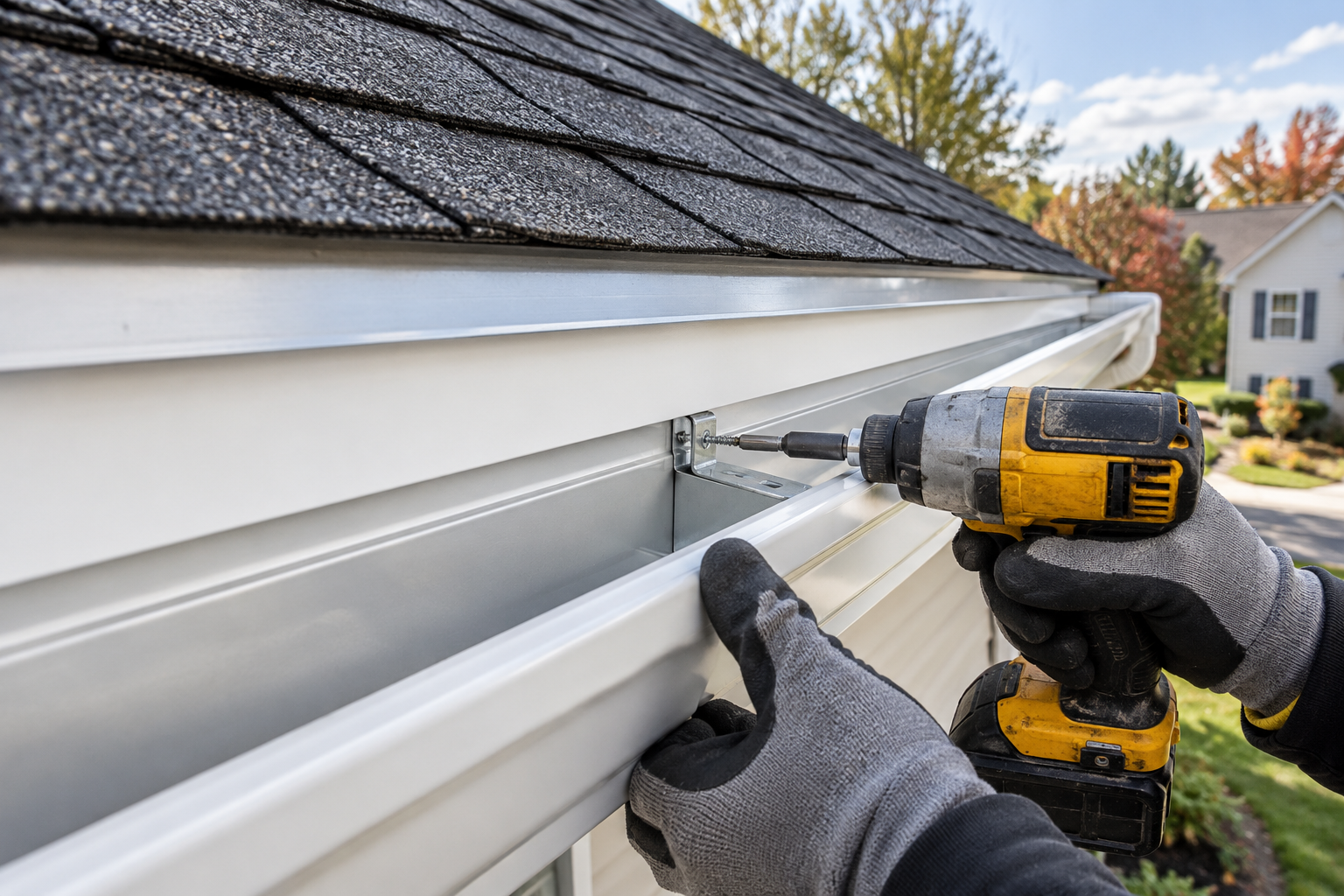
Fascia and gutter installation work together to create a strong, dependable drainage system. The gutters must attach to a stable surface that can support rainwater, snow, and ice. Your home’s siding and fascia materials also affect how installers secure the gutters and downspouts.
Vinyl siding, aluminum fascia, wood fascia, and composite materials each require a different approach. Understanding these materials can help homeowners avoid loose gutters, hidden water damage, and expensive repairs.
Why Fascia and Gutter Installation Work Together!
The fascia board runs along the edge of the roof. In most cases, installers secure the gutter hangers directly to this area. Therefore, the fascia must provide enough strength to support the complete system.

Gutters become much heavier during rainfall. Snow and ice can add even more weight during a Michigan winter. Damaged or weakened fascia may allow the gutters to sag or pull away from the home.
Before installing new gutters, a professional should inspect the fascia for:
- Rot or soft wood
- Peeling paint
- Water stains
- Loose aluminum covering
- Cracks or gaps
- Old mounting damage
- Sagging or uneven sections
Repairing damaged fascia before the installation creates a stronger foundation for the new gutters.
Wood Fascia and Gutter Installation!
Healthy wood fascia gives gutter hangers a solid mounting surface. However, wood can absorb moisture when roof runoff or overflowing gutters repeatedly reaches it.
Rotten wood may look normal from the ground. An installer might only discover the damage after removing the old gutters or checking the mounting surface closely.
Fasteners cannot securely hold new gutters when the wood behind them has softened. The damaged section may need replacement before the installation begins. This extra step helps protect the new gutters and the surrounding roofline.
Proper flashing also helps keep wood fascia dry. Without it, water may travel behind the gutters and gradually damage the mounting surface.
How Aluminum Fascia Affects Gutter Installation!
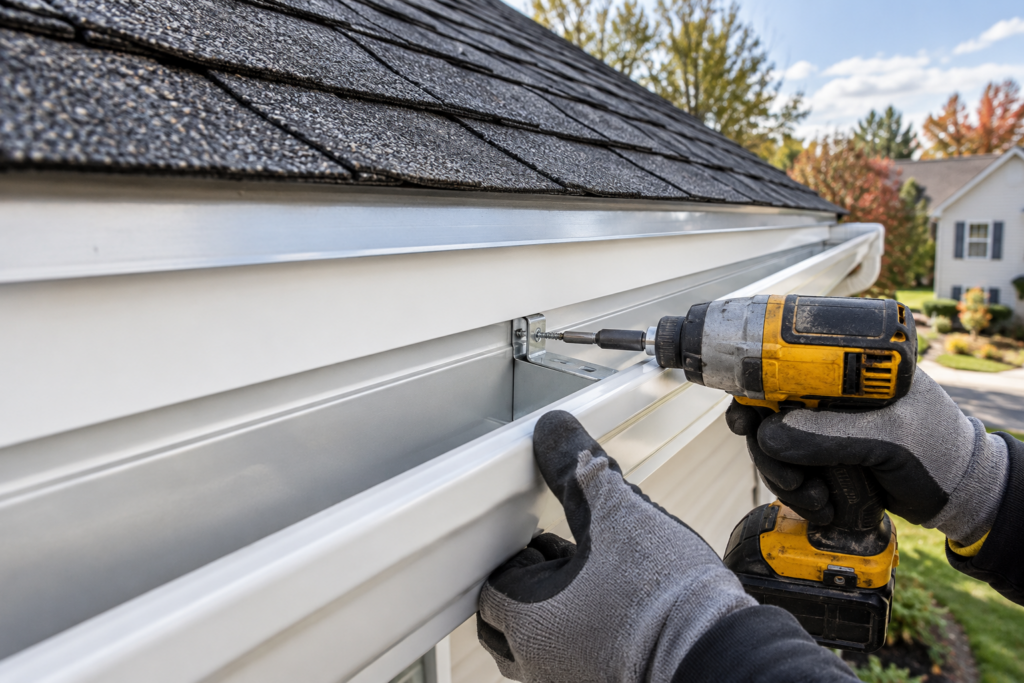
Many homes have thin aluminum installed over the original wood fascia. This covering creates a clean appearance while protecting the wood from weather exposure.
However, the aluminum covering cannot support the gutters by itself. Installers must drive the fasteners through the metal and into solid wood behind it. They also need to avoid crushing or bending the aluminum.
Loose or poorly fitted fascia covering may require repairs before new gutters go up. Otherwise, the finished system could look uneven or leave gaps along the roofline.
Careful fascia and gutter installation protects both the strength and appearance of the home.
How Vinyl Siding Affects Downspout Installation!
Installers normally mount gutters to the fascia, but siding becomes important when they place the downspouts. Downspout straps must hold each vertical section securely against the home.
Vinyl siding expands and contracts as outdoor temperatures change. Incorrect fastener placement can restrict this movement, crack the siding, or leave loose panels behind.
Installers should locate solid material beneath the siding whenever possible. A secure attachment prevents the downspout from moving during strong winds or heavy rainfall.
The finished placement should protect the siding while giving rainwater a direct path away from the home.
Gutter Installation on Brick and Stone Exteriors!
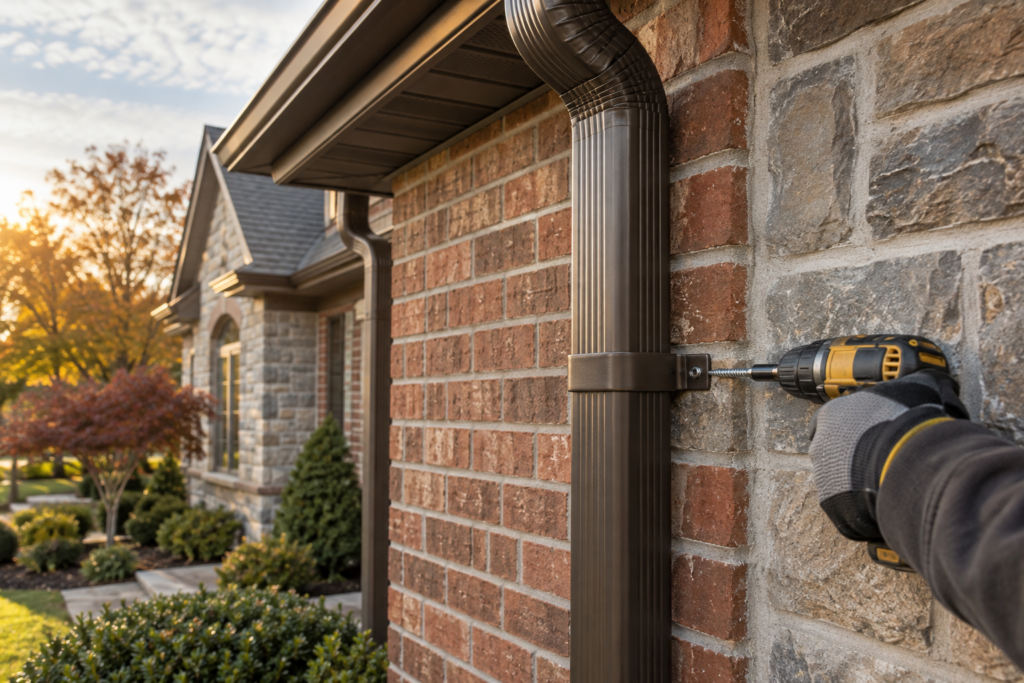
Some homes have brick, stone veneer, fiber cement, or other materials near the downspout locations. Each surface requires the correct tools and fasteners.
Standard screws may not provide enough support in masonry. At the same time, careless drilling can chip brick, crack stone, or damage the mortar.
Professional installers consider the exterior material before attaching the downspout straps. Their goal is to secure the drainage system without damaging the home.
Small details like fastener type and placement can make a major difference in long-term performance.
Roof Edges Affect Fascia and Gutter Installation!
Siding and fascia materials are only part of the installation. The roof edge, drip edge, and gutter apron also help guide rainwater into the gutter.
Incorrect or missing flashing may allow water to travel behind the system. Over time, that moisture can damage the wood fascia even when the gutters appear to work normally.
Installers should examine how the roof edge connects with the proposed gutter location. In some cases, additional flashing can improve drainage and protect the fascia.
A proper connection keeps water away from the hidden materials behind the exterior finish.
Signs Your Gutter Mounting Surface Needs Attention!
Homeowners should watch for signs that the fascia or surrounding materials can no longer support the gutters properly.
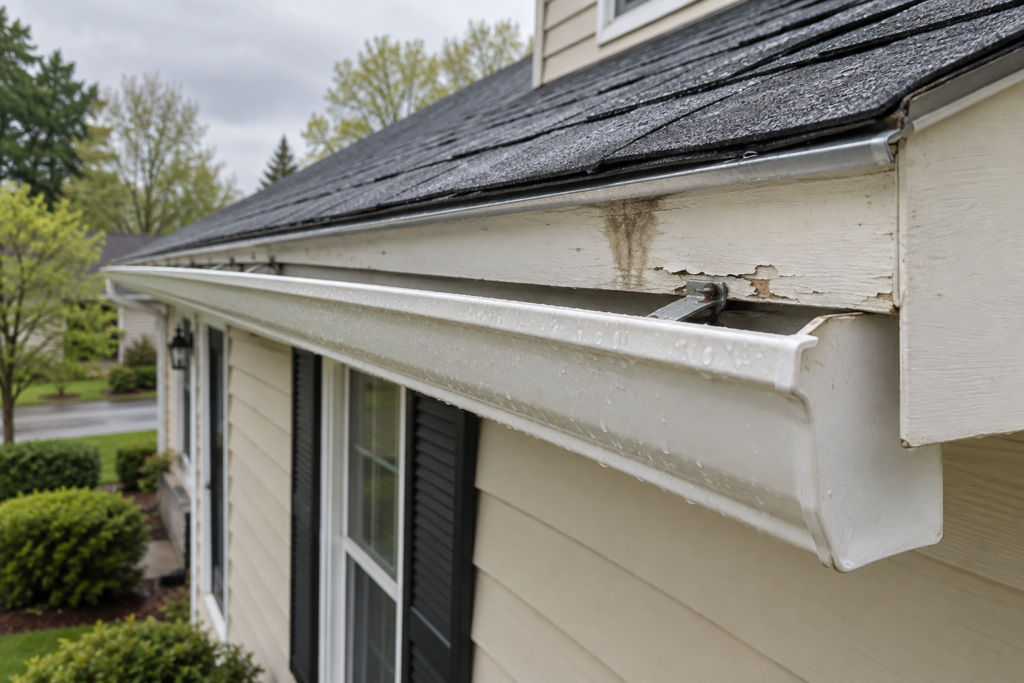
Common warning signs include:
- Gutters pulling away from the roofline
- Gaps between the gutter and fascia
- Sagging sections after rainfall
- Loose downspout straps
- Peeling paint near the roof edge
- Water stains on the siding
- Soft or crumbling wood
- Water leaking behind the gutters
These problems rarely correct themselves. In fact, they often become worse as moisture continues reaching the damaged area.
An early inspection can identify the cause before it affects a larger section of the home.
Proper Gutter Installation Starts With Preparation!
A strong gutter installation begins with a stable mounting surface. Covering damaged fascia with new gutters will not solve the underlying problem.
Professional installers inspect the roofline, select the correct fasteners, and adjust their methods for the home’s exterior materials. They also plan the downspout locations carefully to protect the siding, masonry, landscaping, and foundation.
These steps create a cleaner finished appearance. More importantly, they help the gutter system remain secure through Michigan’s changing weather.
Trust J&A Exterior With Fascia and Gutter Installation!

Every home needs a gutter system that fits its structure and exterior materials. J&A Exterior considers the fascia condition, siding type, roof edge, and complete drainage path before installing new gutters.
Proper fascia and gutter installation protects the roofline while directing rainwater away from the home. If your gutters are sagging, leaking, or ready for replacement, contact J&A Exterior today to schedule an inspection and receive a free estimate.
Sincerely,
J&A Exterior Seamless Gutters!
