
Understanding how underground downspout drains carry water away from a home can help homeowners protect their property from moisture-related problems. Gutters collect rainwater from the roof, while downspouts direct that water toward the ground. However, the water still needs somewhere safe to go once it reaches the bottom of each downspout.
That is where an underground drainage system can help. Instead of releasing water next to the foundation, an underground drain moves it farther away from the house. When the entire system works correctly, it creates a clear path for water from the roof to a safer discharge area.
What Is an Underground Downspout Drain?
An underground downspout drain is a buried pipe connected to the bottom of a downspout. The pipe carries rainwater beneath the lawn and releases it away from the home.
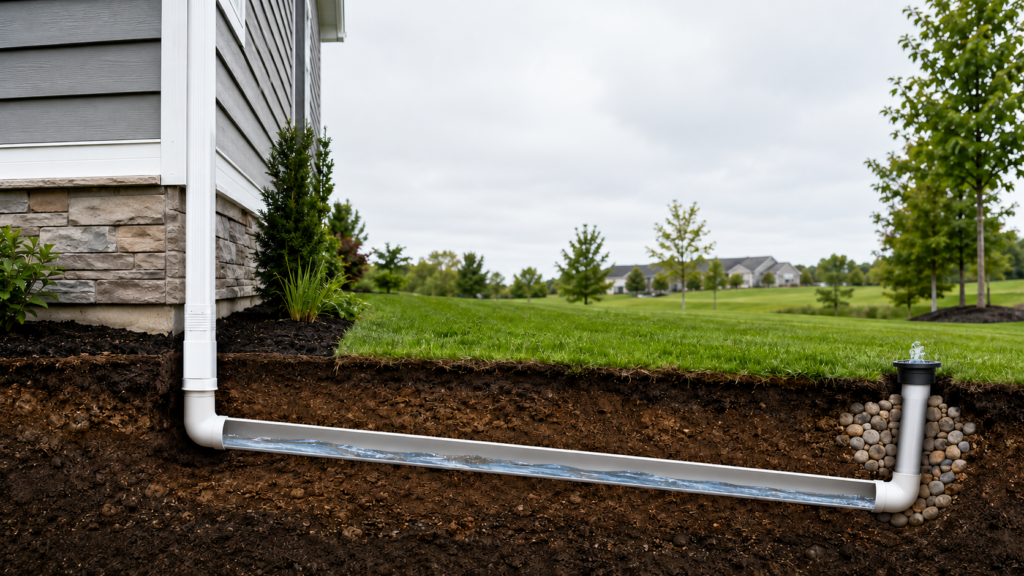
Depending on the property, the system may direct water toward:
- A pop-up drainage emitter
- A storm drainage system
- A dry well
- A drainage ditch
- A lower section of the property
- Another approved discharge location
The purpose is simple: move roof water away from areas where it could cause damage.
Without proper drainage, water may collect near the foundation, wash away mulch, create muddy areas, or flow back toward the house. Underground drains can provide a cleaner and more permanent solution than short downspout extensions.
How Underground Downspout Drains Carry Water Away From a Home!
The process begins when rain lands on the roof. As water moves down the roof surface, the gutters collect it along the roofline. The gutters must have the correct pitch so water can flow toward the downspout outlets.
From there, the downspouts move the water vertically toward the ground. Instead of allowing it to spill out near the foundation, the downspout connects to an underground pipe. That pipe uses gravity and a slight downward slope to move water away from the house.
The water eventually reaches the system’s discharge point. Once there, it can safely drain into an approved area rather than collecting beside the home.
Each part of the system depends on the others. Clean gutters, open downspouts, secure connections, properly sloped pipes, and a clear discharge point all help water move efficiently.
Why Moving Roof Water Away Matters!

A roof can collect a large amount of water during a single Michigan rainstorm. If that water gets released too close to the house, it may create several problems over time.
Poor drainage can contribute to:
- Water pooling near the foundation
- Basement or crawl-space moisture
- Soil erosion around the home
- Damaged mulch and landscaping
- Muddy areas throughout the yard
- Water stains on siding or masonry
- Foundation movement caused by changing soil conditions
Gutters do more than keep rain from falling along the roofline. Their main purpose is to control water and send it to a safer location. An underground drainage system helps complete that process.
The Importance of Proper Pipe Slope!
Underground drainpipes need enough slope to keep water moving. If a pipe sits too flat, water may remain trapped inside it. A section that slopes toward the house can even cause water to back up near the downspout.
Standing water also allows dirt and debris to settle inside the pipe. Over time, this buildup may restrict the flow and lead to a blockage.
Michigan’s freezing temperatures create another concern. Water left inside a buried drain can freeze during winter. The ice may block the system, place pressure on connections, or slow drainage when temperatures begin to change.
Proper planning and installation help reduce these risks.
Common Underground Drainage Problems!
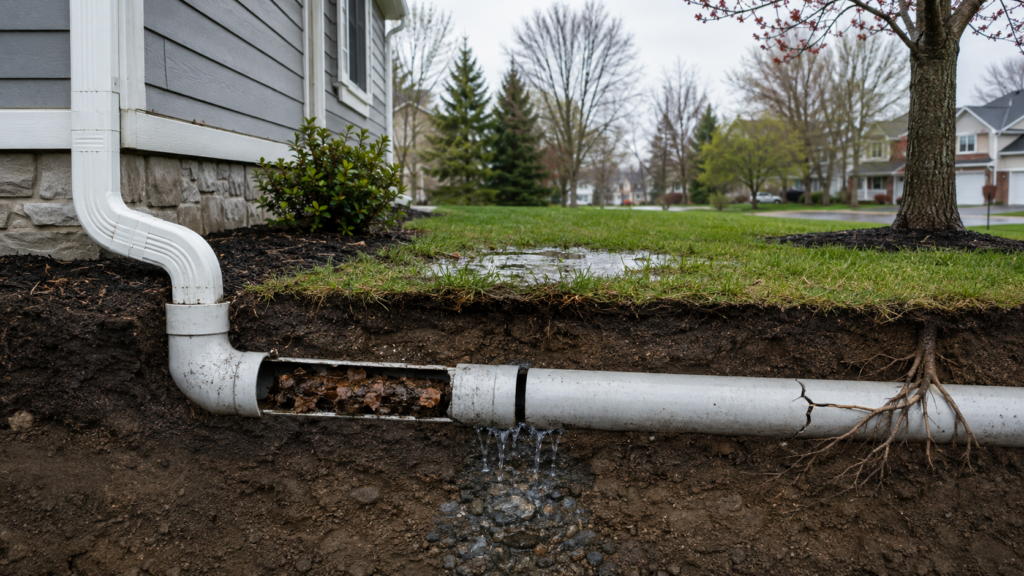
Even a well-designed drain may develop problems as it ages. Soil can shift, roots can grow near the line, and debris can enter through the gutter system.
Some common issues include:
- Leaves and roofing debris blocking the pipe
- Crushed or collapsed drain lines
- Separated pipe connections
- Tree roots entering damaged sections
- Improper slope
- Frozen water inside the drain
- A blocked pop-up emitter
- An outlet covered by soil, grass, or landscaping
These problems can prevent water from leaving the system. When that happens, water may back up through the downspout or overflow from the gutters.
Signs an Underground Downspout Drain May Be Clogged!
A drainage issue is not always easy to see because most of the pipe sits below ground. However, homeowners can watch for several warning signs.
Possible signs of a blocked or damaged drain include:
- Gutters overflowing during moderate rainfall
- Water rising around the downspout connection
- Leaks where the downspout enters the buried pipe
- Gurgling sounds near the connection
- Water failing to appear at the discharge point
- Soggy ground along the buried drain line
- Water pooling near the foundation
- A pop-up emitter that no longer opens
Sometimes the gutters receive the blame even though the actual problem sits underground. If the gutters and downspouts are clear but water still backs up, the buried drain should receive attention.

Gutters and Underground Drains Must Work Together!
Learning how underground downspout drains carry water away from a home also shows why every section of the drainage system matters. A large underground pipe cannot correct gutters that have the wrong pitch. Likewise, clean gutters cannot drain properly into a blocked underground line.
The gutter system needs enough capacity for the roof. Downspouts must also have the correct size and placement. Finally, the underground drain needs a clear path and a safe outlet.
If one part fails, the entire system may struggle during heavy rain.
Do All Homes Need Underground Downspout Drains?
Not every property requires buried drainage. Some homes have enough space and natural slope to use above-ground downspout extensions. These extensions can move water away effectively when they are long enough and point toward a suitable drainage area.
Underground drains may make sense when:
- The yard has limited drainage space
- Above-ground extensions create a tripping hazard
- Water regularly pools near the home
- Landscaping makes surface drainage difficult
- Homeowners want a cleaner exterior appearance
- Downspouts need to discharge farther from the foundation
The right option depends on the home, yard, soil, roof size, and surrounding grade.
Protect the Entire Gutter and Drainage System!
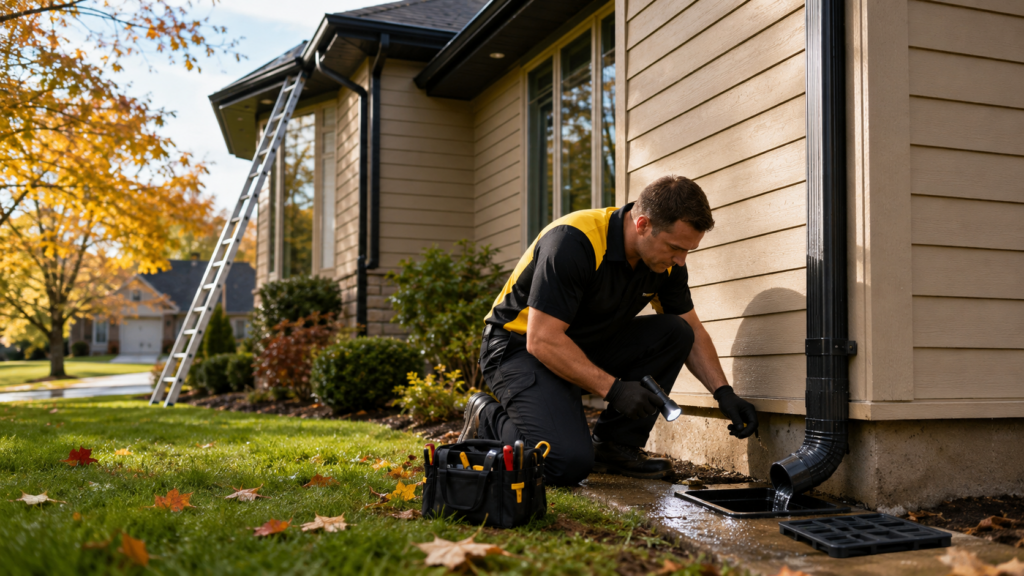
Understanding how underground downspout drains carry water away from a home makes it easier to recognize the importance of proper water management. Gutters collect the rain, downspouts move it downward, and underground pipes carry it to a safer location.
Homeowners should keep gutters clean, watch for overflow, and check drainage outlets during rainfall. If water backs up or collects near the foundation, the issue should not be ignored.
J&A Exterior can inspect your gutter system, identify visible drainage concerns, and help determine whether your gutters and downspouts are moving water correctly. Contact our team today to schedule an inspection or request a free estimate.
