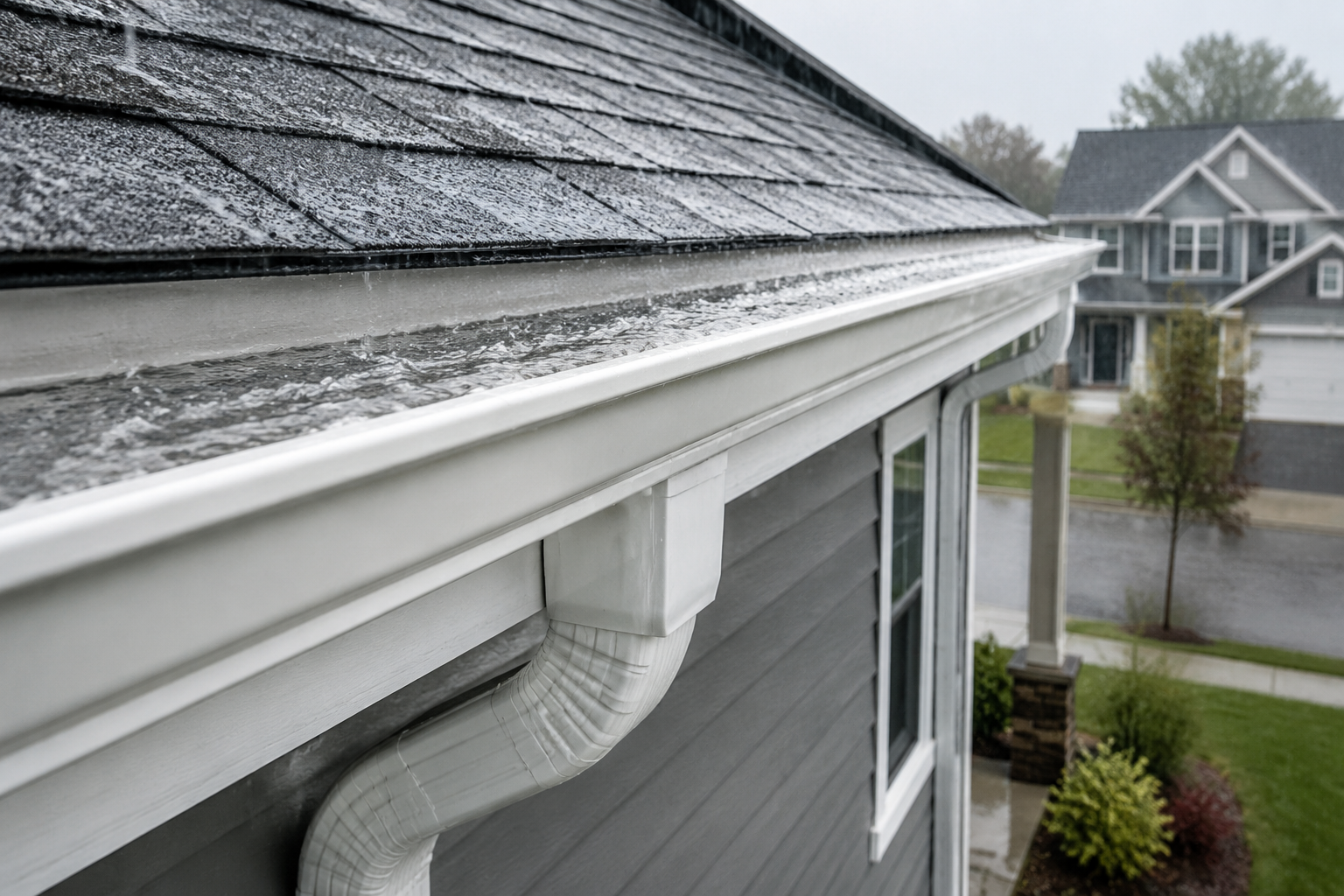
Not every section of your roof handles the same amount of rainwater. Some areas collect water from a small, simple roof surface. Other sections receive runoff from several roof slopes at once. Because of this, certain parts of your home may need more gutter capacity to prevent overflowing and water damage.
A properly designed gutter system accounts for the shape, size, and pitch of your roof. It also considers where water naturally collects during heavy rain. Understanding these differences can help homeowners choose a gutter system that protects the entire property.
What Does Gutter Capacity Mean?
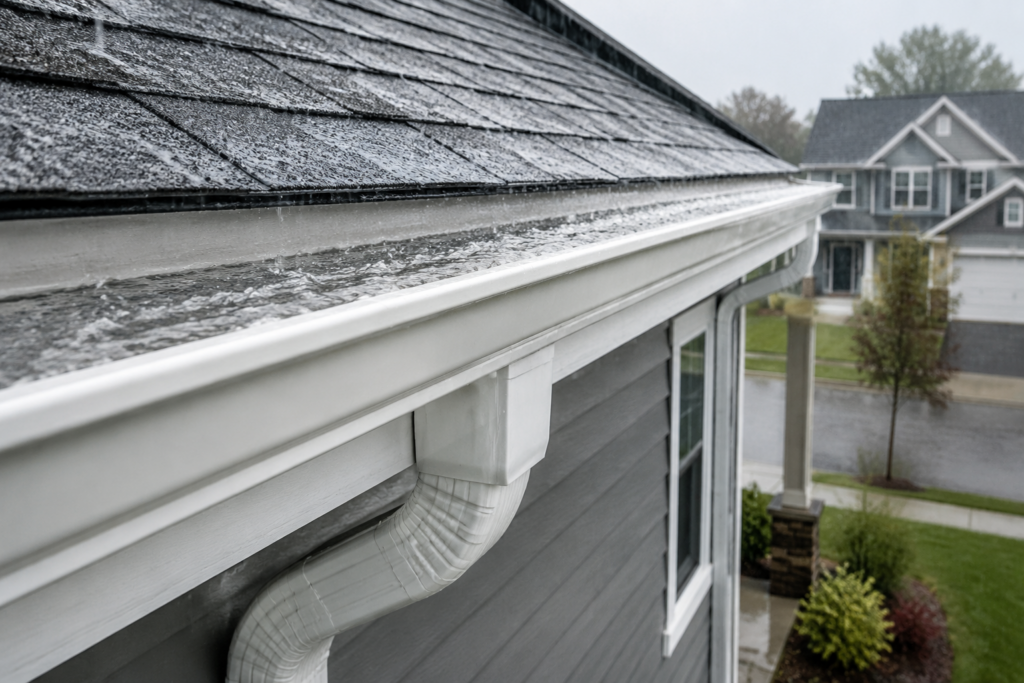
Gutter capacity refers to the amount of rainwater a gutter system can collect and move away from your home. The size of the gutters, number of downspouts, and placement of gutter outlets all affect this capacity.
Many homes use standard 5-inch gutters. However, larger homes or complex rooflines may benefit from 6-inch seamless gutters. These gutters can handle more water and provide additional protection during Michigan’s heavier rainstorms.
The right size depends on more than the total square footage of the roof. Certain sections may experience much heavier water flow than others.
Roof Valleys Can Create Heavy Water Flow!
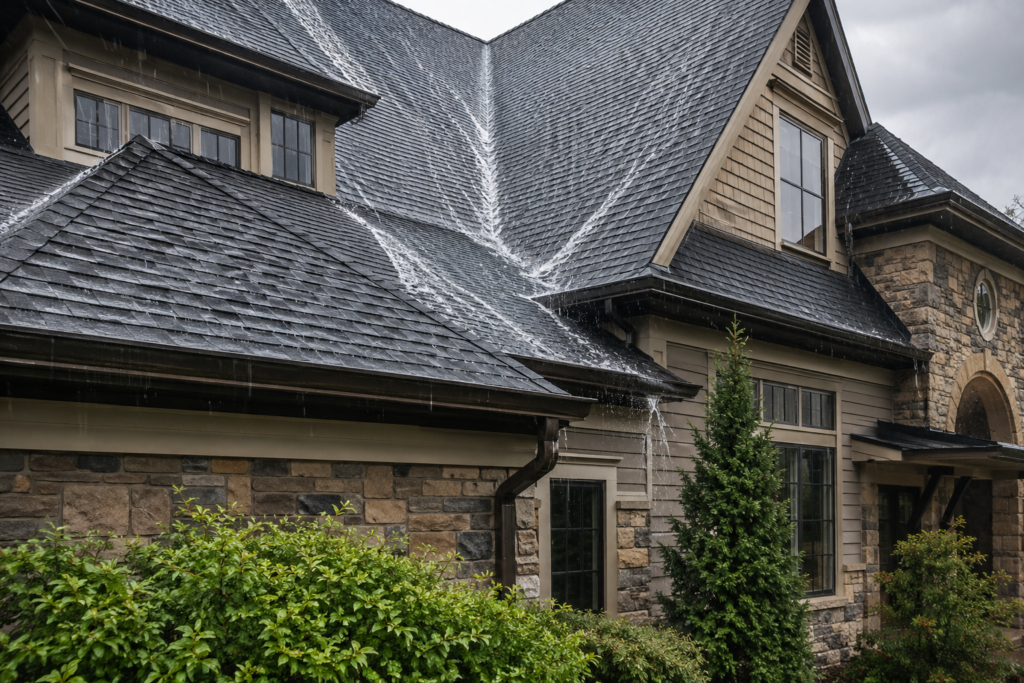
A roof valley forms where two roof slopes meet. During rainfall, both surfaces direct water toward the same narrow area. This creates a concentrated stream that moves quickly toward the gutter below.
Roof valleys often cause problems when the gutter section cannot handle the sudden volume of water. You may notice water shooting over the gutter, spilling behind it, or washing out the landscaping below.
Adding more gutter capacity near a roof valley can help control this concentrated runoff. A larger gutter, properly placed downspout, or improved outlet can move the water away more effectively.
Steep Roofs May Need More Gutter Capacity!
The pitch of your roof affects how quickly rainwater reaches the gutters. Water moves more slowly across a low-slope roof. A steep roof sends it downward much faster.
Fast-moving water can travel over the front edge of an undersized gutter. It may also splash against the fascia or flow behind the gutter system.
Homes with steep roofs often benefit from larger gutters and careful placement. The system must catch the water while also providing enough room to drain it quickly.
Multiple Roof Sections Can Drain Into One Area!
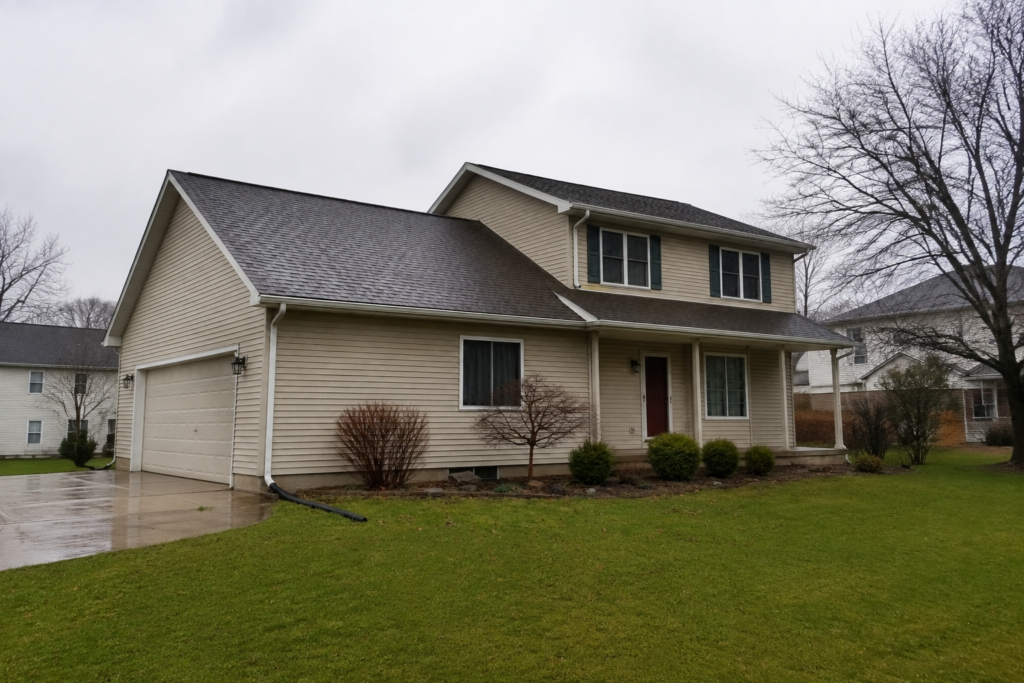
Dormers, additions, garages, and intersecting rooflines can direct runoff toward one gutter section. Although that section may appear small, it could handle water from several parts of the roof.
This commonly happens when an upper roof drains onto a lower roof. The lower gutter then collects its normal runoff along with water from the section above it.
Without enough gutter capacity, the lower area may overflow even when the rest of the system works correctly. A custom gutter layout can account for this added volume and direct the water toward the right downspouts.
Downspouts Affect Gutter Capacity Too!
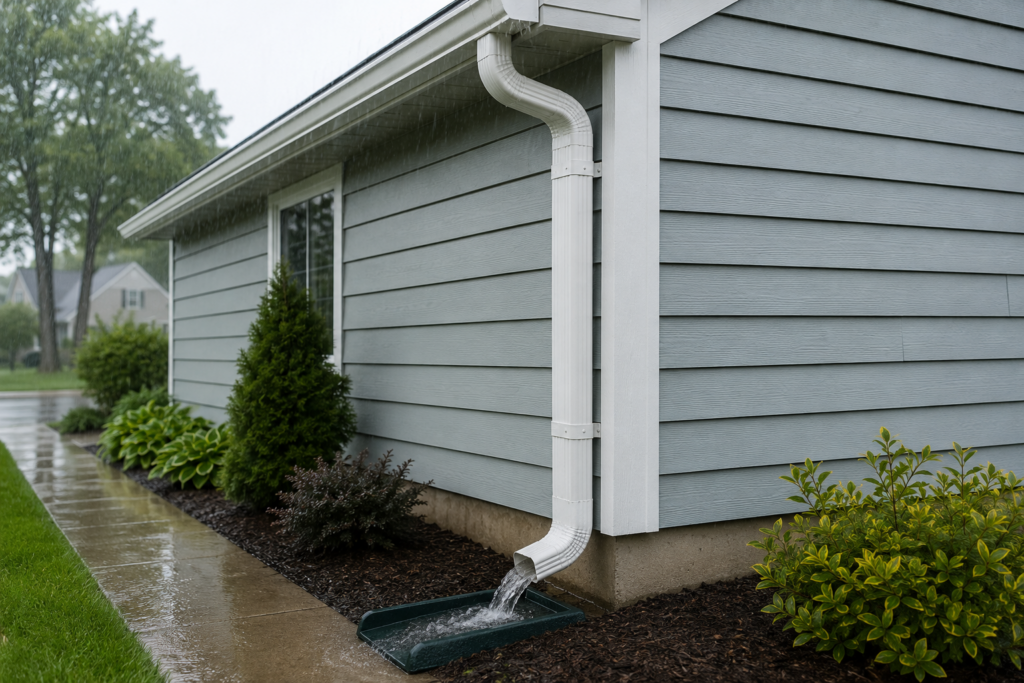
Larger gutters cannot solve every drainage problem on their own. Water must also have a clear path out of the gutter system.
Too few downspouts can allow water to build up during heavy rainfall. A poorly positioned downspout may leave one end of the gutter carrying too much water. Small gutter outlets can also restrict the flow.
A properly designed system combines the correct gutter size with enough downspouts and outlets. Each component must work together to move water safely away from the home.
Signs That One Gutter Section Needs More Capacity!
You do not always need to wait for major damage to identify a problem. Watch for these warning signs around specific areas of your roof:
- Water overflowing from the same gutter section
- Soil erosion or damaged mulch below the gutter
- Water stains on the siding or fascia
- Puddles forming near the foundation
- Gutters pulling away or sagging in one area
- Water spilling over near a roof valley
- Excessive runoff during moderate or heavy rain
If the problem only occurs in one location, the entire system may not need replacement. That section may simply require a better drainage design.
Why Proper Gutter Capacity Protects Your Home!
Overflowing gutters can affect more than the appearance of your exterior. Water may damage fascia boards, stain siding, erode landscaping, or collect near the foundation.
Over time, repeated exposure can lead to wood rot, foundation concerns, and expensive exterior repairs. Increasing the capacity in high-flow areas helps prevent these problems before they become worse.
The goal is not always to install the largest gutter available. The goal is to create a balanced system that matches the way water moves across your roof.
Every Roof Needs a Custom Gutter Design!
Two homes of similar size can have very different drainage needs. Roof pitch, valleys, additions, and downspout locations all influence the amount of water each gutter section must manage.
At J&A Exterior, we evaluate the complete roofline before recommending a gutter system. Our team installs custom seamless gutters designed to manage water efficiently while providing a clean, finished appearance.
If certain areas of your gutters regularly overflow, the problem may involve more than leaves or debris. That part of your roof may need more gutter capacity.
Contact J&A Exterior today to schedule a free estimate for seamless gutter installation in Macomb County and the surrounding Michigan communities.
