

Why Are Shingle Granules in Gutters?
Finding shingle granules in gutters is common on homes with asphalt roofing. These small particles protect shingles from sunlight, weather, and everyday wear. Some granule loss is normal, but a large or increasing amount may deserve attention.
Loose roofing granules can also settle inside gutters, collect around outlets, and restrict drainage. Understanding why this happens can help homeowners protect their roofs and gutter systems.
Understanding Asphalt Shingle Granules!
Asphalt shingles have a layer of small, mineral-based granules across their surface. These particles give the roof its color and shield the asphalt underneath from ultraviolet rays and harsh weather.
Rainwater carries loose material down the roof and toward the gutters. Because the granules are heavier than many other types of debris, they often settle along the gutter bottom instead of washing completely through the system.
A small amount of shingle granules in gutters does not always indicate a serious roofing problem. Excessive accumulation, however, could mean the shingles are losing more of their protective surface.
How Loose Material Reaches the Gutters!
New asphalt shingles often release extra material shortly after installation. Manufacturers apply more granules than the shingles need, so some loose particles may wash away during the first several rainstorms.

Older roofs can also shed granules because of regular exposure to rain, wind, snow, ice, and sunlight. Michigan’s changing temperatures may contribute to gradual roofing wear throughout the year.
Several conditions can increase granule loss:
- Strong storms or hail
- Branches rubbing against the roof
- Foot traffic during exterior work
- Aging or damaged shingles
- Concentrated runoff through roof valleys
The material naturally travels toward the lowest edge of the roof. Therefore, finding loose roofing granules inside the gutters is often one of the first noticeable signs.
Is Asphalt Roof Granule Loss Normal?
A light layer of granules is usually expected, especially after a roof replacement or severe storm. The amount, timing, and overall condition of the shingles help determine whether the loss may be concerning.
Pay closer attention if you suddenly discover a large amount of shingle granules in gutters after previously seeing very little. Bare, dark, or uneven areas on the roof can also indicate that certain shingles are losing their surface protection.
A gutter professional can identify and remove buildup from the drainage system. However, a qualified roofing professional should inspect the shingles and determine whether repairs are necessary.

Buildup Can Restrict Water Flow!
Although roofing granules are small, they can create drainage problems as they accumulate. Their weight allows them to form a dense layer along the bottom of the gutter.
This buildup may slow rainwater as it travels toward the downspouts. The particles can also combine with leaves, twigs, and other debris to create stubborn blockages around gutter outlets.
Restricted drainage can lead to overflowing gutters, standing water, exterior staining, or puddles near the foundation. Wet granule buildup also adds unnecessary weight to the system.
Shingle Granules Can Enter Downspouts!
Not every loose particle remains inside the gutters. Rainwater may carry shingle granules in gutters toward the downspouts, where they can settle inside bends and elbows. Some granules eventually wash out and become visible near the bottom opening.
Accumulation may be harder to detect when a downspout connects to an underground drainage system. Slow drainage, backups, or water escaping near the connection could indicate a restriction.
Avoid forcing tools or other objects into the downspout. Doing so could damage the system or push the blockage deeper. A professional can locate the affected area and determine the safest way to clear it.
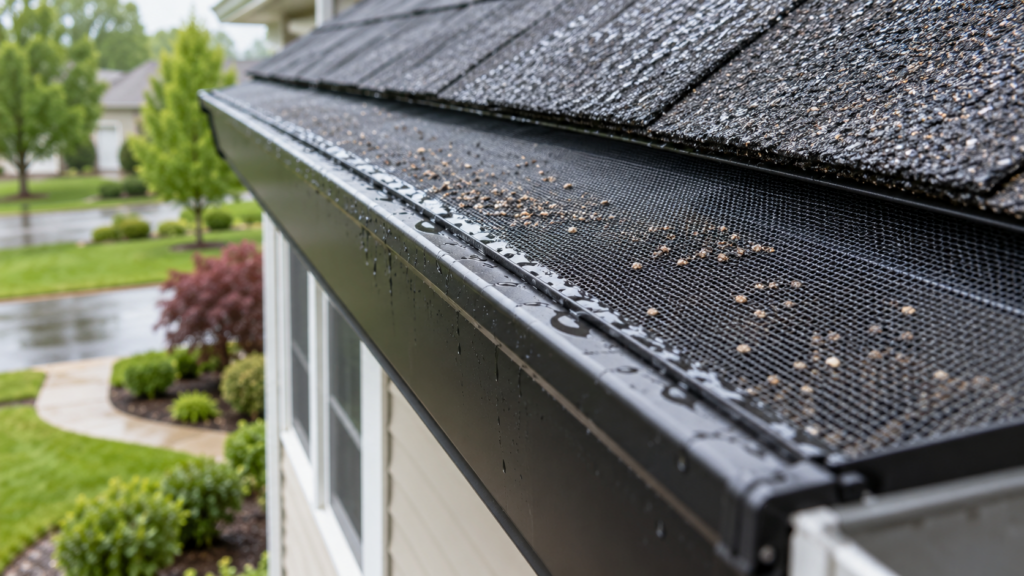
Can Gutter Guards Block Roofing Granules?
Gutter guards reduce the amount of leaves and larger debris entering the system. However, many roofing granules are small enough to pass through openings in certain guard products.
This does not necessarily mean the guards have failed. Their main purpose is usually to block larger debris while allowing rainwater to enter the gutter. Occasional inspection and maintenance may still be necessary.
The roof’s pitch, surrounding trees, age of the shingles, and type of gutter guard can all affect how much loose material reaches the gutter system.
Warning Signs That Deserve Attention!
Consider scheduling an inspection if you notice unusually large piles of granules, recurring gutter overflow, or slow-draining downspouts. Dark or bare-looking areas on the roof should also be evaluated by a roofing professional.
Checking for shingle granules in gutters is especially important after hail, strong winds, or roofing work. These events can loosen additional material and carry it toward gutter outlets.
Never climb onto the roof without proper training and safety equipment. Many warning signs can be observed from the ground, while professionals can safely inspect difficult areas.
Remove Granule Buildup From Your Gutters!

Some granule loss is a normal part of the aging process for asphalt shingles. Excessive buildup, however, can restrict water flow and may point to changes in the condition of the roof.
Routine gutter maintenance removes roofing particles, leaves, and other debris. It also keeps water moving toward the downspouts and provides an opportunity to identify unusual accumulation.
J&A Exterior can clean and inspect your gutter system, check the downspouts, and identify areas where debris is affecting drainage. If the granule loss appears unusual, a roofing professional can evaluate the shingles.
Contact J&A Exterior today to schedule gutter service or request a free estimate!
Warn Regards,
The J&A Team!
