Why Water Can Get Behind Your Gutters!
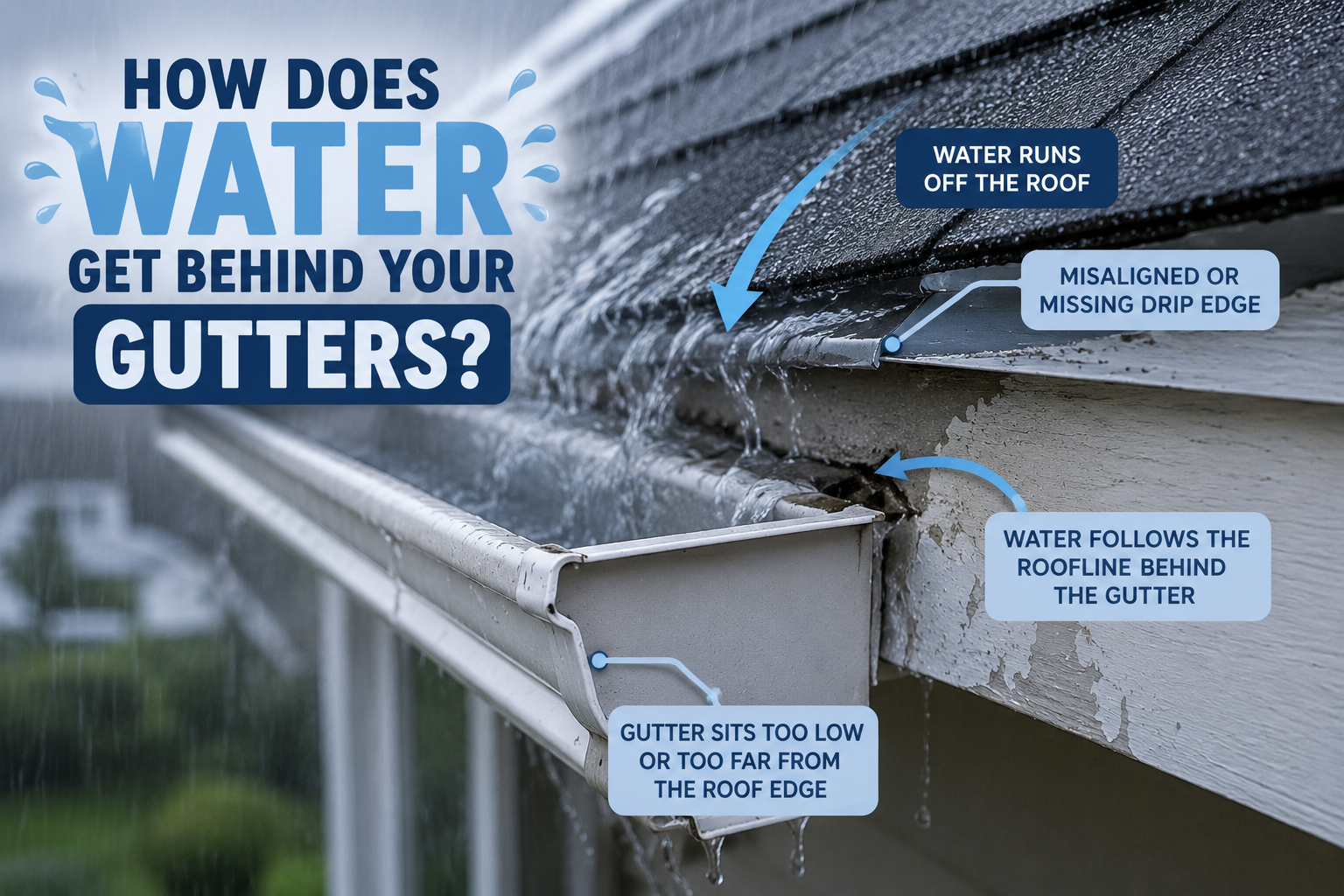
Gutters are designed to catch rainwater coming off your roof and direct it safely away from your home. However, sometimes water doesn’t make it into the gutter at all. Instead, it travels between the gutter and roofline, allowing moisture to reach areas that should stay protected.
Understanding why water can get behind your gutters can help you catch a drainage problem before it causes damage to your fascia, siding, or other parts of your home.
How Does Water Get Behind Your Gutters?
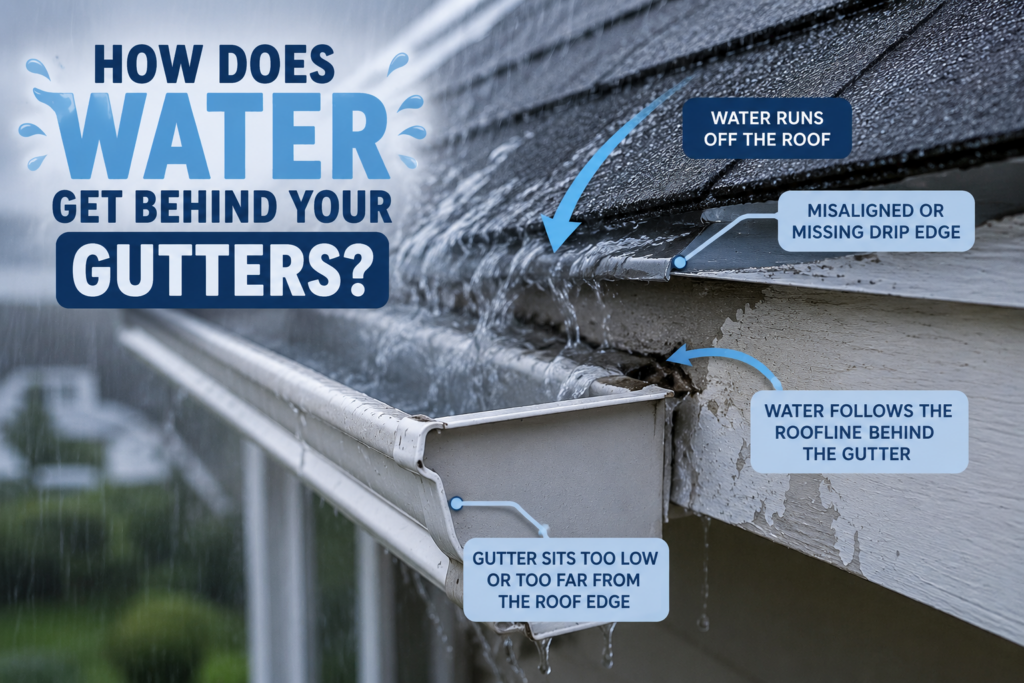
When rain reaches the edge of your roof, it should flow directly into the gutter. Several small problems can interrupt that path.
A gutter may sit too low, there may be an issue with the drip edge, or a gap may exist between the roofline and gutter. Instead of falling into the gutter, water can follow the edge of the roof and run behind it.
This problem may be difficult to notice during light rain. A heavier storm can make it much more obvious.
Gutter Position Can Make A Big Difference!
Proper gutter placement is about more than making the system look straight. Gutters need to sit in the correct position underneath the roofline to capture runoff effectively.
If gutters sit too low or too far away from the roof, water can miss them completely.
■ Water may run behind the gutter.
■ Heavy runoff may overshoot the gutter.
■ Fascia boards can experience repeated moisture exposure.
■ Water may drip down the siding or collect near the foundation.
Professional installation takes the roofline, pitch, and expected water flow into account when determining where gutters should sit.

Your Drip Edge Plays An Important Role!
The drip edge is a small piece of metal installed along the edge of the roof. Although it may not look like much, it plays an important role in controlling water.
Its purpose is to help guide water away from the roof decking and fascia. Ideally, runoff should leave the drip edge and enter the gutter below.
If the drip edge and gutter aren’t working together properly, water can find its way behind the gutter instead.
This is one reason homeowners may notice water problems even when their gutters aren’t clogged.
Heavy Rain Can Expose Hidden Problems!
Michigan weather can put a gutter system to the test. A minor positioning or drainage issue may go unnoticed during a small rainstorm.
During heavier rainfall, much more water moves across the roof at once.
Roof valleys can make the problem even more noticeable because they concentrate runoff into smaller sections of the gutter system. If the gutter can’t properly capture that water, some of it may travel over or behind the gutter.
That’s why watching your gutters during a heavier rainstorm can tell you a lot about how well the system is performing.
What Are The Signs Water Is Getting Behind Your Gutters?
You don’t necessarily need to climb a ladder to spot a potential problem. Many warning signs can be seen safely from the ground.
Look for:
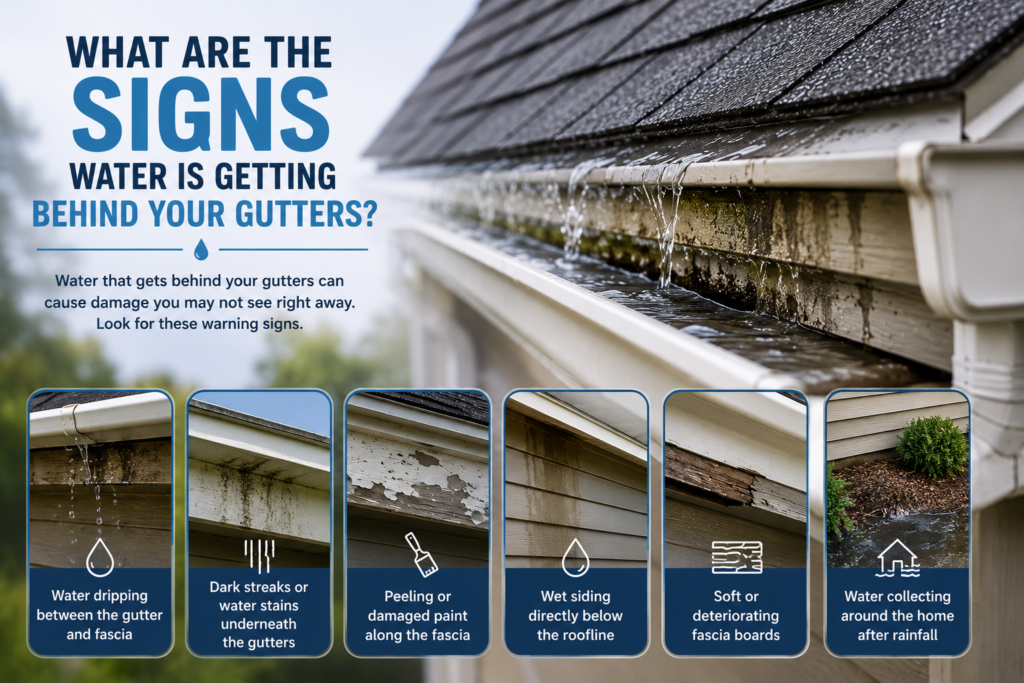
■ Water dripping between the gutter and fascia
■ Dark streaks or water stains underneath the gutters
■ Peeling or damaged paint along the fascia
■ Wet siding directly below the roofline
■ Soft or deteriorating fascia boards
■ Water collecting around the home after rainfall
Seeing one of these signs doesn’t always mean the entire gutter system needs replacement. However, it does mean the source of the water should be identified.
Water Behind Your Gutters Can Damage The Fascia!
Your fascia provides an important mounting surface for the gutter system. When water repeatedly gets behind the gutters, the fascia can remain wet much longer than it should.
Over time, that moisture can contribute to staining, peeling paint, deterioration, or wood rot.
Once fascia begins weakening, it can also become more difficult for the gutter hangers to maintain a strong connection. This can eventually lead to loose or sagging sections of gutter.
Addressing the original water problem early can help prevent a much larger exterior repair later.
Proper Installation Helps Keep Water Where It Belongs!
Every home has a different roofline, pitch, drainage pattern, and gutter layout. That’s why gutter installation shouldn’t rely on a one-size-fits-all approach.
Proper gutter positioning, secure hangers, correctly placed downspouts, and attention to the roof’s drainage patterns all help water move where it should.
At J&A Exterior, we take these details into account when installing seamless gutter systems. The goal isn’t simply to put gutters on a home. It’s to create a system that effectively collects water and moves it away from the areas you want to protect.
Don’t Ignore Water Behind Your Gutters!
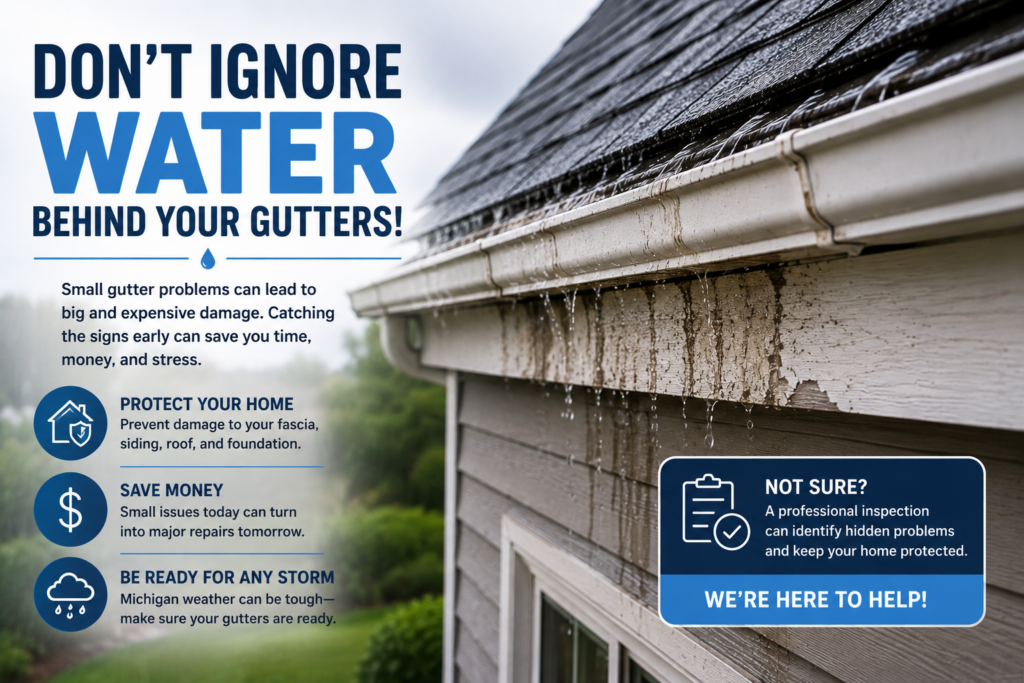
Knowing why water can get behind your gutters makes it easier to recognize a problem before repeated moisture causes unnecessary damage.
If you notice water dripping behind your gutters, staining along the fascia, or unusual runoff during storms, it’s worth having the system checked.
J&A Exterior provides professional gutter installation, repair, and exterior solutions designed to help Michigan homeowners keep rainwater under control.
A properly functioning gutter system does more than handle rain—it helps protect your home every time a storm rolls through.
