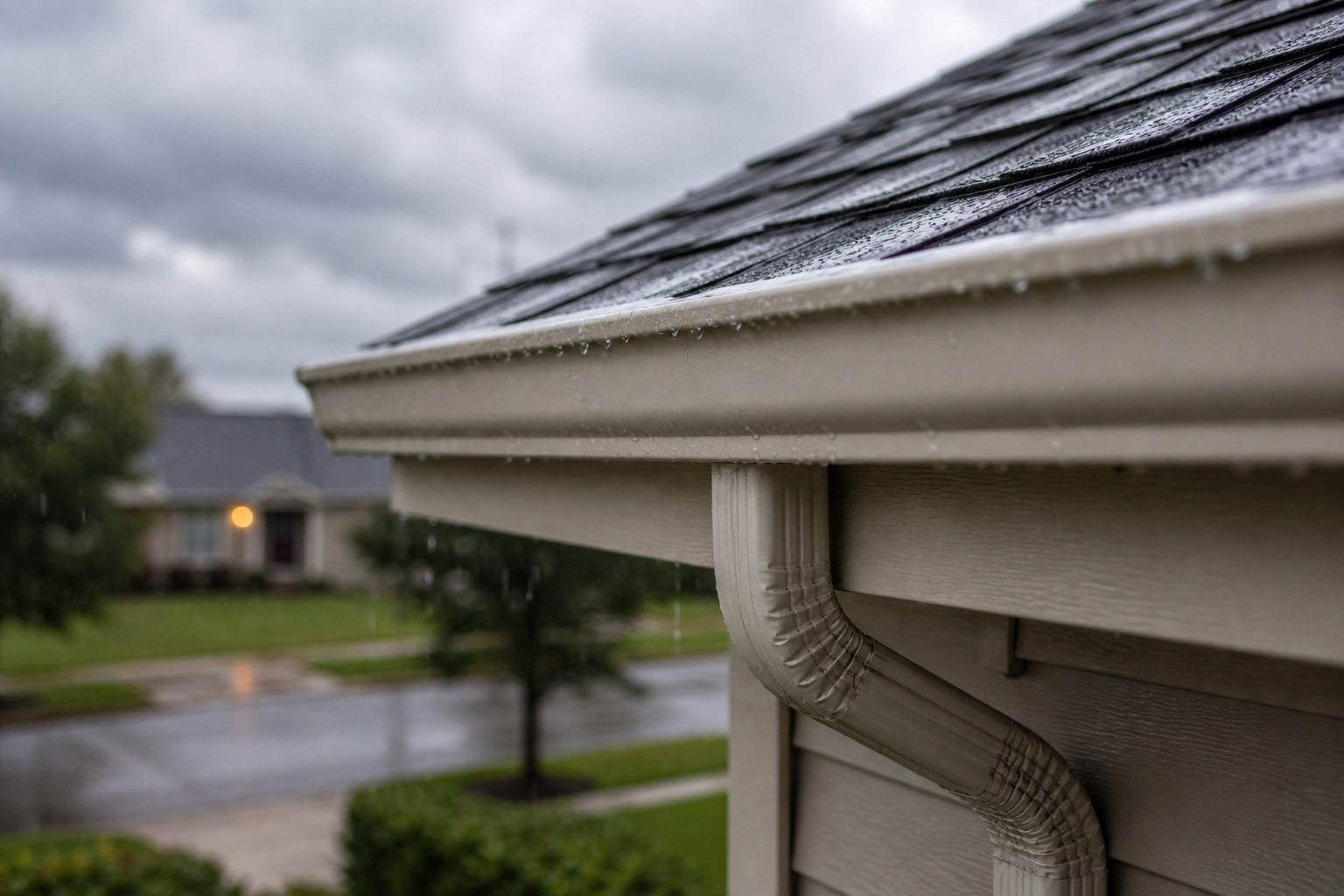
Why Overflow Isn’t Always the First Sign of a Problem!
When most homeowners think about gutter problems, they picture one thing:
– Water pouring over the sides during a heavy rainstorm.
And while overflow is definitely a sign something is wrong, it’s usually not the first sign.
In reality, gutter problems often start quietly. Long before water starts spilling over the edges, your system may already be struggling in ways that are easy to miss from the ground.
That’s what makes these issues so dangerous—they often develop slowly and stay hidden until damage has already started.
Problems Usually Begin Before You Can See Them!
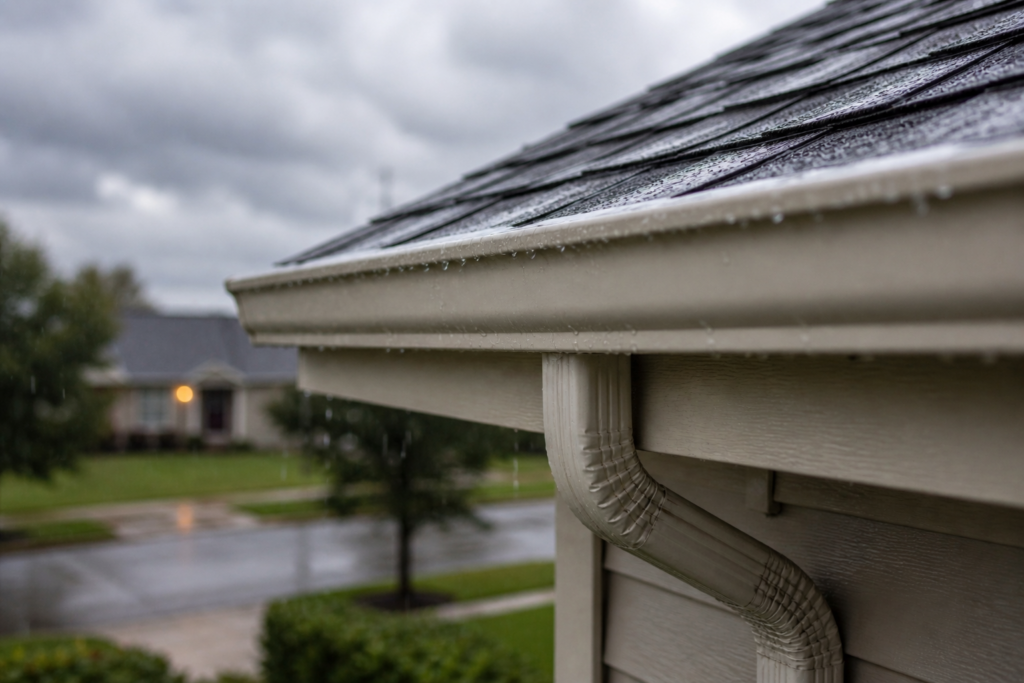
A gutter system doesn’t go from “perfect” to overflowing overnight.
Most issues start with small changes. Water may begin moving slower than normal, debris starts collecting in certain sections, or a downspout stops draining as efficiently as it used to. None of these issues seem major at first, which is why they’re often ignored.
But every storm adds a little more stress to the system, and over time those small changes begin affecting how water moves around your home.
Water Doesn’t Need to Overflow to Cause Damage!
One of the biggest misconceptions homeowners have is that if water isn’t visibly pouring over the edge, the gutters must be working properly.
That’s not always true.
Water can still run behind the gutters, sit too long in low spots, or slowly leak from corners and seams. Even without dramatic overflow, the ground around your home may already be absorbing more water than it should.
The problem is that these early-stage issues are subtle. They don’t grab your attention the way a major overflow does.
The Earliest Signs Are Easy to Miss!
Most gutter problems show themselves in small ways before they become obvious.
You may start noticing little things around the property:
- Water stains forming on siding
- Areas of mulch shifting after rain
- One section of grass staying wet longer than the rest
- Gutters beginning to sag slightly
On their own, these signs don’t seem urgent. But together, they usually point to water not flowing correctly through the system anymore.
Small Flow Problems Get Worse With Time!
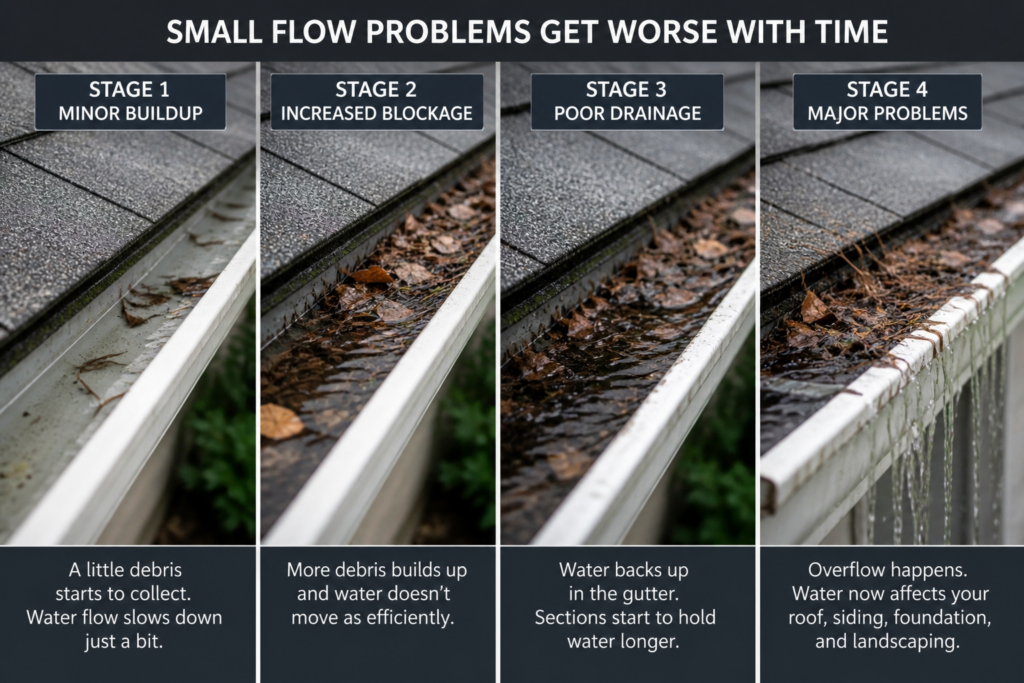
Gutters are designed to move water efficiently and consistently. Once that flow is interrupted—even slightly—water begins finding new paths.
At first, it may only happen during heavier storms. Then debris starts collecting faster, water pressure builds in weaker sections, and certain parts of the system begin wearing down quicker than others.
Eventually, the gutters reach a point where they simply can’t keep up anymore. That’s when homeowners finally see overflow and realize something’s wrong.
But by then, the issue has usually been developing for a while.
Overflow Is Usually the “Late Stage” Warning!
Overflow is often the moment people notice the problem—not the moment it actually started.
By the time water is spilling over the sides, moisture may have already been collecting around the home for months. Soil may already be eroding. Wood near the roofline may already be absorbing water repeatedly.
This is why waiting for obvious overflow can lead to:
- Drainage problems around the property
- Damage to fascia and roof edges
- Moisture buildup near the foundation
- Landscaping and lawn issues
The larger warning signs almost always come after the smaller ones.
Why Homeowners Don’t Catch It Earlier!
Most people don’t regularly inspect their gutters, especially if nothing appears obviously wrong.
And from the ground, many early problems are nearly impossible to notice unless you know what to look for. A slight pitch issue, partial clog, or slow drainage problem can quietly continue through multiple storms before it becomes visible.
That’s why preventative maintenance is so important. Catching small issues early is what prevents the expensive ones later.
What to Watch For Before Overflow Happens!
You don’t have to wait until water is pouring over the sides to know something’s wrong.
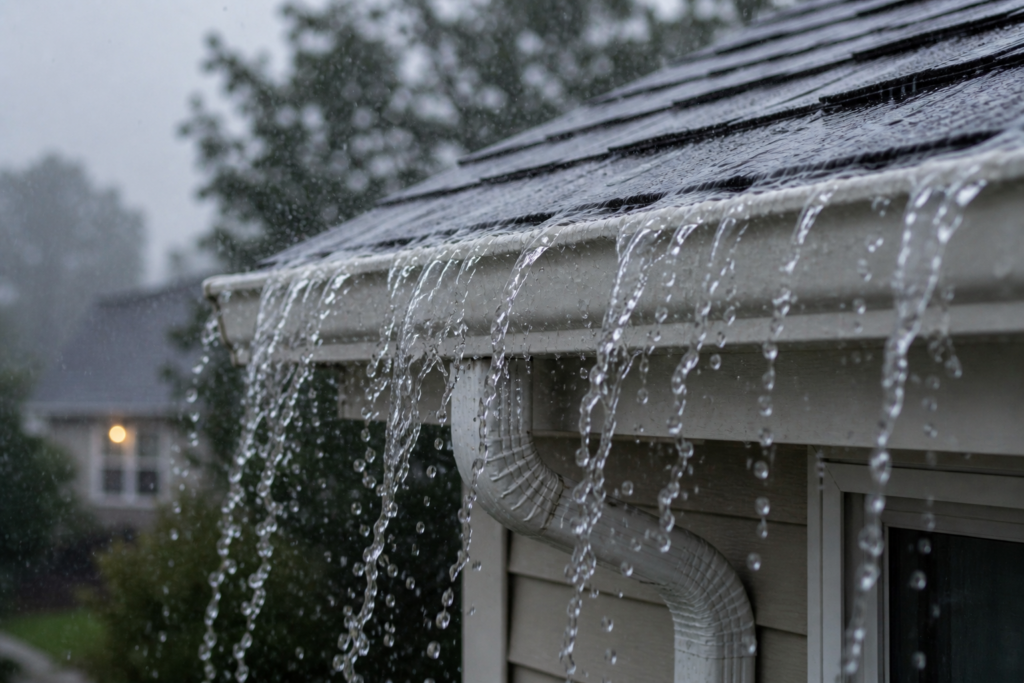
A few subtle signs can tell you a lot:
- Water marks below the gutter line
- Wet areas near the foundation after rain
- Gutters pulling away from the home
- Sections where water seems to drain slowly
These early indicators are often the best chance to fix the issue before damage starts spreading.
Catch the Problem Early, Not Late!
The good news is that most gutter problems are much easier—and much cheaper—to fix in the early stages.
A simple inspection, cleaning, or adjustment can often stop the progression before water starts affecting other parts of the home.
Because with gutters, the biggest damage usually begins before the biggest warning sign appears.
📞 Schedule a Free Inspection
If it’s been a while since your gutters have been checked, now’s the perfect time to catch small issues early.
Contact J&A Exterior Seamless Gutters today for a free inspection and make sure your system is ready before the next storm rolls through.
📞 Call us at (248)-403-0281
📧 Email us at office@jaexterior.com
🌐 Visit our website at www.jaexterior.com
If you Enjoyed Please Share!
Recent Blogs
- Don’t Get Left in the Dark: Final Days to Schedule Your Christmas Light Installation
- Why Permanent Lighting Is Better Than Traditional Holiday Lights
- Are Gutter Guards Worth the Money?
- Signs It’s Time to Replace Your Gutters with Seamless Ones
- What’s Included in a Professional Holiday Light Installation
- Power Washing Your Home and Soft Washing Roof Services in Metro Detroit
- Our New Gutter Cleaning Packages – Choose What’s Best for Your Home
